Cypress Community Coalition
Houston, Texas
Responding to an Invisible Threat
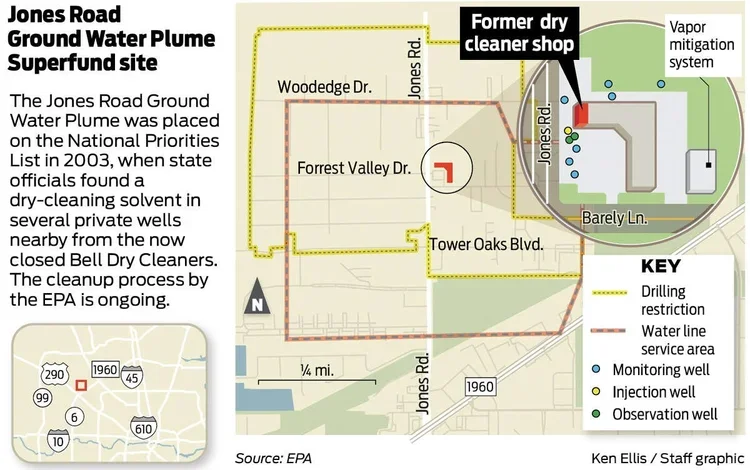
The Cypress Community Coalition came together to address a hidden, but dangerous contaminated waste site, the Jones Road Ground Water Plume Superfund Site.
It looks like another strip mall alleyway, hidden away from view, but for nearly fifteen years, this is where employees at the Bell Dry Cleaners dumped the chemicals from their cleaning operations, allowing harsh contaminants to flow into the storm drains and seep deep into the local aquifer.
The EPA added the Jones Road Ground Water Plume Superfund Site to the National Priorities List in 2003 and, despite efforts to reduce the risk, in 2022 the EPA found that its measures are still not adequately protecting the public.
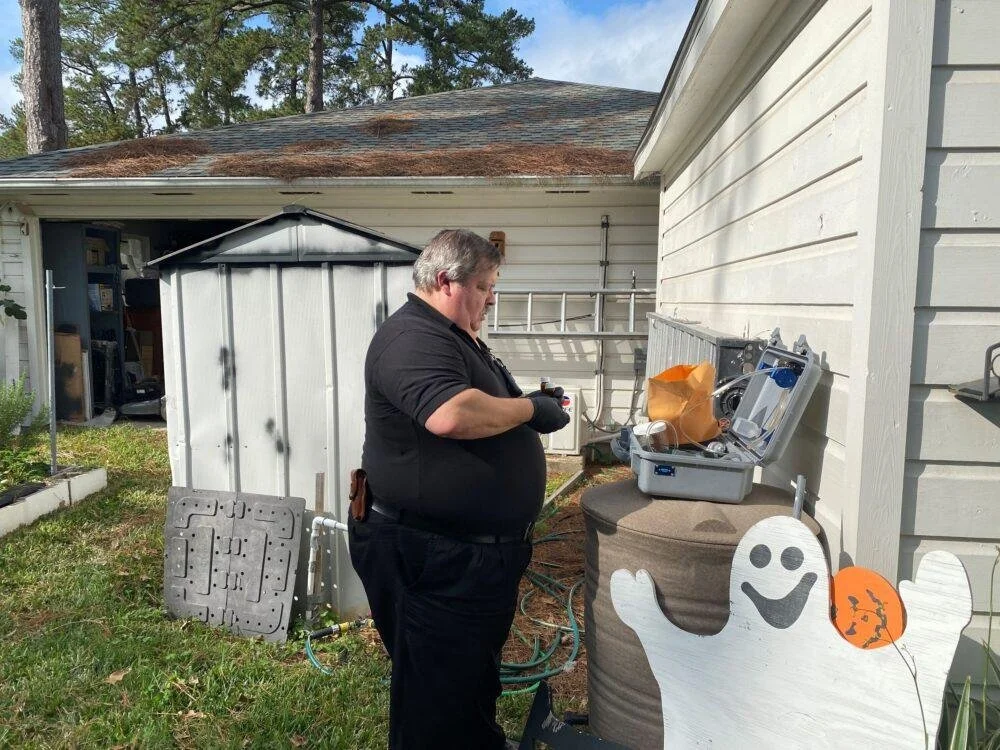
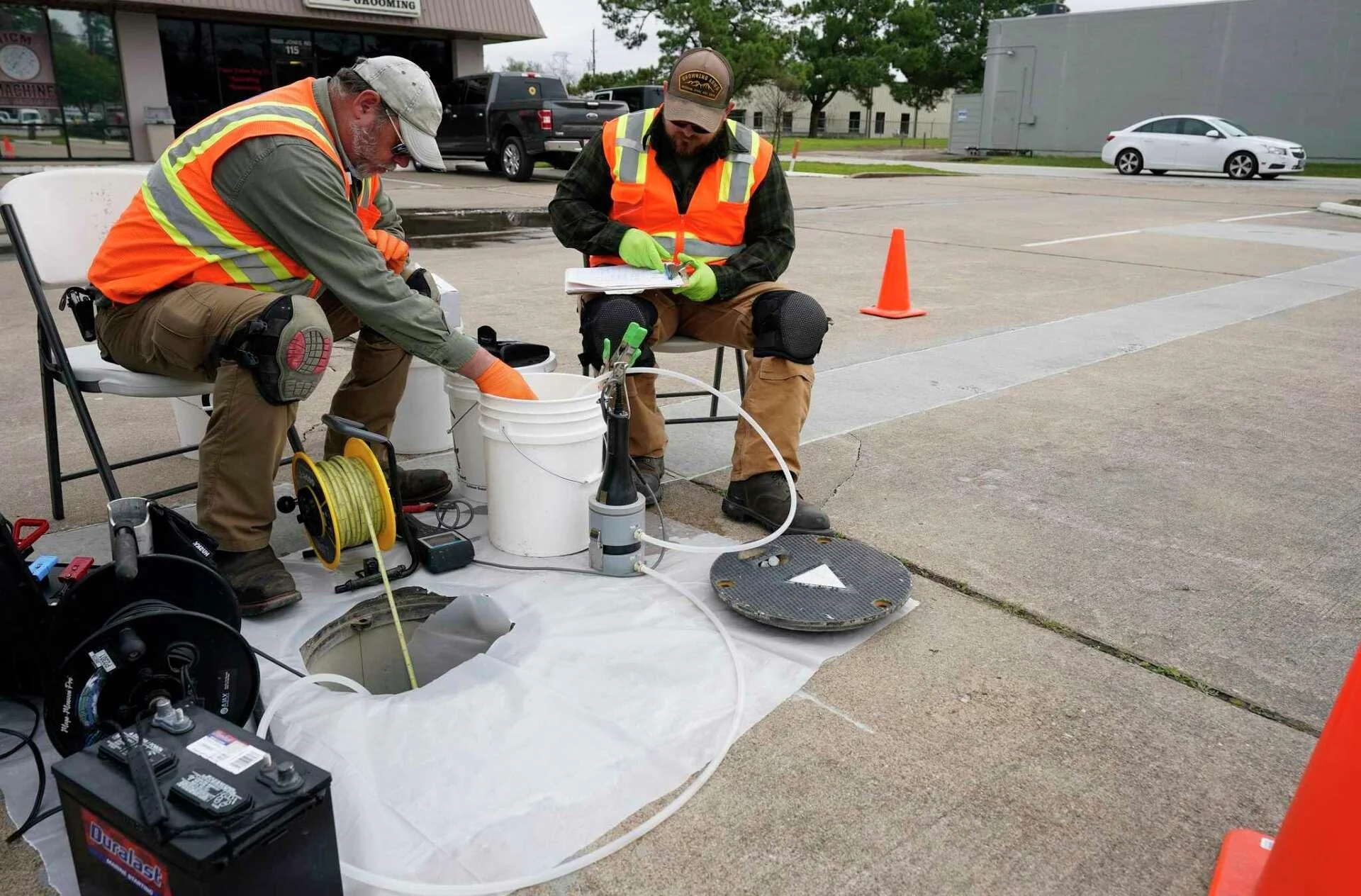
Lance Hallberg from UTMB takes a water sample from a private well near the Jones Road Superfund Site. It was one of 55 properties where water and air samples were collected as part of a study conducted in collaboration with THEA. THEA has also conducted independent testing in the area to help residents better understand environmental concerns.
What Was In The Wastewater?
The EPA found a number of highly toxic chemicals, including tetrachloroethylene, also known as perchloroethylene (PCE), or PERC for short. PERC was a widely used solvent in dry cleaning operations. Exposure can irritate the skin and respiratory system, cause liver and kidney damage, harm the development of unborn babies, and cause cancer.
What’s The Risk?
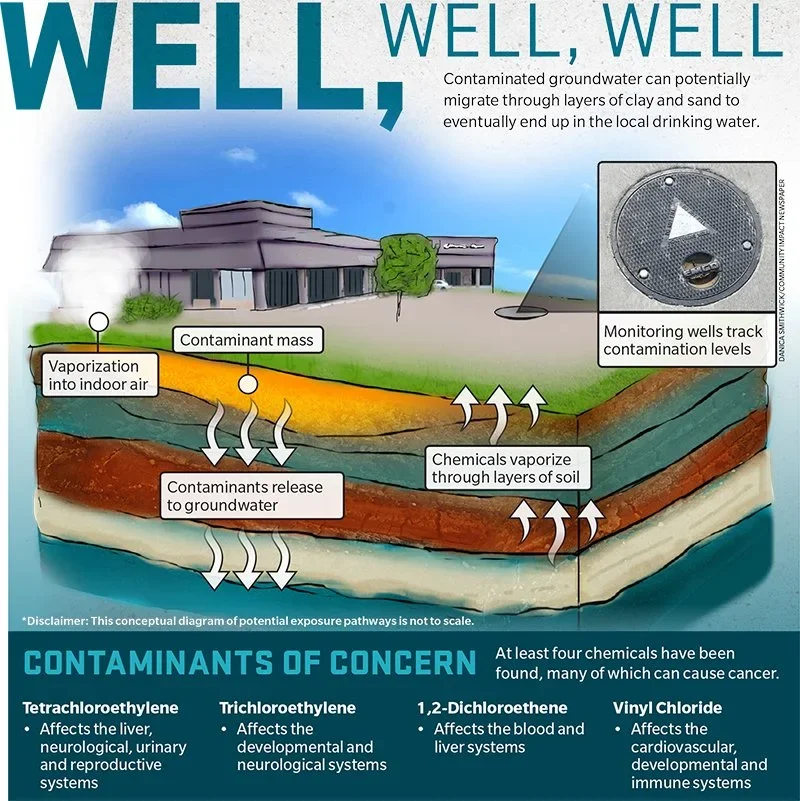
An increasingly diverse community of more than 29,000 people live in and around the Superfund Site. The danger comes from chemicals that seeped into the groundwater and created a toxic plume that continues to spread beneath the homes located around the strip mall where the wastewater was first dumped. Toxic vapors can also escape into the atmosphere and inside buildings above the plume.
The EPA has set up a vapor collection station near the source to address shallow contamination. However, most water wells in the area tap into the zone of groundwater with the toxic chemicals.
In 2017, Texas Department of State Health Services identified local childhood leukemia rates over twice the state average. Through THEA’s Community Health Surveys, we’ve observed children who’ve battled multiple types of cancer, adult leukemia, uterine cancer, lung cancer, and much more.
What is THEA Doing?
While the EPA has taken several steps to protect the public, THEA’s Cypress Community Coalition continues to elevate resident concerns about gaps in communication, monitoring, and long-term protection. Many residents remain unaware that they may be at risk, and some have drilled new water wells despite the existing drilling restrictions and the “No New Well” area designated by the Texas Department of Licensing and Registration (TDLR). THEA is also concerned that the toxic plume has migrated since it was last mapped in 2010, meaning additional homeowners may be at risk now.
THEA partnered with the University of Texas Medical Branch to perform air, water, and soil testing for area residents. The resulting data helped give us the facts to push the EPA to implement more effective protection measures. It also raised awareness and engagement among people in the area. Additionally, THEA conducted 125 independent water tests from July 2023 to March 2026.