San Jacinto River Coalition
East Harris County, Texas
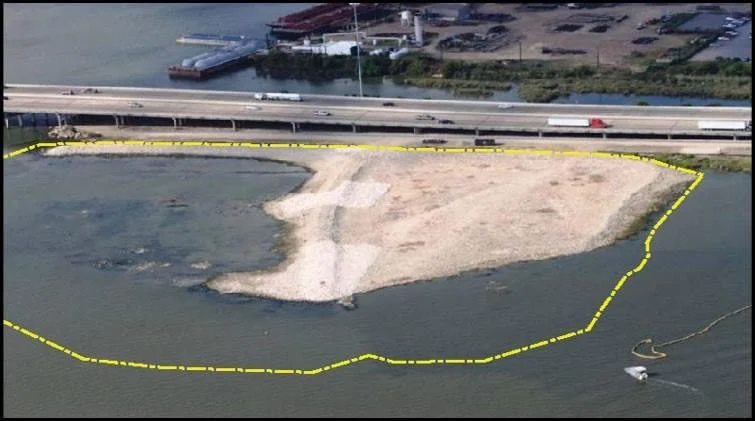
Aerial view of the San Jacinto River Waste Pits beside the Interstate 10 bridge.
The San Jacinto River Waste Pits Superfund Site is an example of the damage that hazardous chemicals can do to our local environment, but it also shows how the dedicated work of our citizens can create change.
Nearly 60 years ago, Champion Paper Mill hired McGinnis Industrial Maintenance Corporation to dispose of highly toxic waste in two pits on the banks of the San Jacinto River and on either side of the I-10 interstate.
Today, experts say nearly two-thirds of that waste has washed into the river and, without remediation, the remaining dioxins and other chemicals in the pits will be a threat for the next 750 years.
Time Passes And Residents Suffer
At THEA’s urging, state officials and researchers have assessed disease rates for the communities around the San Jacinto River Waste Pits.
Here’s what they found:
Women living on the east bank of the San Jacinto River, adjacent to the Waste Pits, have among the highest rates of maternal mortality and comorbidities in the nation.
Thirty percent of pregnancies in this area result in at least one serious complication.
Area residents have contracted abnormally high rates for 14 different types of cancer, including Childhood brain cancer, leukemia and liver cancer.
Additionally, a birth defect study showed an increased incidence of congenital heart defects and a rare disorder causing babies to be born with exposed digestive organs.
That is why THEA’s San Jacinto River Coalition is so committed to a full cleanup of the Superfund Site. Together, THEA and the coalition members have cut decades off the time it usually takes to work through the Superfund process.
In late 2016 we submitted 55,000 petition signatures to the EPA supporting removal of the waste material so that it would never again be a threat to people or the environment

On October 11, 2017, The EPA issued their long-awaited Record of Decision (ROD), which unequivocally ruled in the coalition’s favor ordering a full remediation of the site costing nearly $115 million to be paid by the two responsible parties - International Paper and Waste Management.
In 2021, the Remedial Action of the Southern Impoundment (or Waste Pit) began. This is the phase of the Superfund process where physical removal of waste takes place.

THEA also scored a victory in court in 2025, forcing the Army Corps of Engineers to withdraw a dredge permit that threatened to disturb toxic material in the nearby Superfund site.

In May of 2026 the EPA issued a federal order for cleanup to begin at the Northern Waste Pit of the San Jacinto River Waste Pits. A long fought win for the surrounding communities as this moves the regulatory process forward and incorporates numerous community requests.
Hurricane Threat
The ecosystem is still at risk with every hurricane or extreme rain event. Hurricane Harvey’s storm surge fully submerged the Waste Pits and damaged the cap that was supposed to keep the chemicals from reaching the river. An EPA dive team found cancer-causing dioxin levels in the river water that were more than 2,000 times higher than maximum recommended levels.

Seafood Advisory
Elevated levels of dioxin found in fish in the San Jacinto River 20 years ago were one of the first signs that told experts there was a problem in the vicinity of the waste pits. The advisories against eating fish and shellfish on the San Jacinto River remain in place and testing of marine life continues to show unacceptably high levels of contamination.
The continued health threat to people who eat seafood from the area is a major reason there are consumption advisories warning people that fish and crab from the area are not safe for consumption.